요즘, 혼자서 AI 서비스를 만드는 사람들이 늘어나고 있습니다. 과거에는 팀을 꾸리고 앱을 개발하며 투자까지 받아야 겨우 MVP 하나 내놓을 수 있었다면, 지금은 전혀 다른 상황입니다.
LLM API는 기본적인 대화 인터페이스를 손쉽게 구현할 수 있게 해주고, Cursor나 Flowise 같은 툴은 개발자 경험이 없는 사람도 웹 기반 서비스를 빠르게 만들어볼 수 있도록 도와줍니다. 이제는 기획자, 디자이너, 혹은 비개발자 출신의 1인 창업가들이 단독으로 ‘진짜 서비스’를 만들고, 실제로 시장에서 사용자와 매출을 확보하는 시대가 된 것입니다.
이런 흐름 속에서 특히 눈에 띄는 분야가 AI 채팅 기반 서비스입니다. 단순한 챗봇을 넘어, 캐릭터와 감정적으로 교감하거나, 사용자 개인의 성향·데이터를 반영해 몰입도 높은 대화를 만들어내는 방향으로 빠르게 진화하고 있죠.
실제로 이러한 감성 기반의 AI 챗 서비스를 통해 실질적인 수익을 올리고 있는 1인 창업 사례도 등장하고 있습니다. 1인 개발자가 시작한 BabeChat은 AI 캐릭터와 감정적인 대화를 나누는 서비스를 통해 출시 1년 만에 월 5억 원 이상의 반복 매출을 달성했습니다. 캐릭터의 개성과 세계관, 사용자의 몰입 경험에 집중한 설계가 주효했습니다.
또 다른 사례인 젠디는 연애나 감정 상담처럼 일상적인 고민을 AI와 나누는 경험을 중심으로, 6개월 만에 월 매출 1억 원을 넘기며 빠르게 시장에 안착했습니다. 기술적 복잡성보다는 정서적 경험을 정교하게 구성한 것이 유저 리텐션과 결제를 이끈 핵심 요인이었습니다.
이처럼, 혼자 만든 챗 기반 서비스들이 수억 원의 매출을 올릴 수 있는 이유는 결국 ‘대화의 깊이’와 ‘경험의 설계’에 달려 있습니다. 그렇다면 지금 이 순간, 사람들이 실제로 돈을 내며 사용하고 있는 AI 챗 서비스의 유형은 무엇일까요?
다음으로, 최근 가장 뜨거운 반응을 얻고 있는 AI 채팅 서비스의 5가지 주제를 정리해보겠습니다.
1. AI 캐릭터 챗
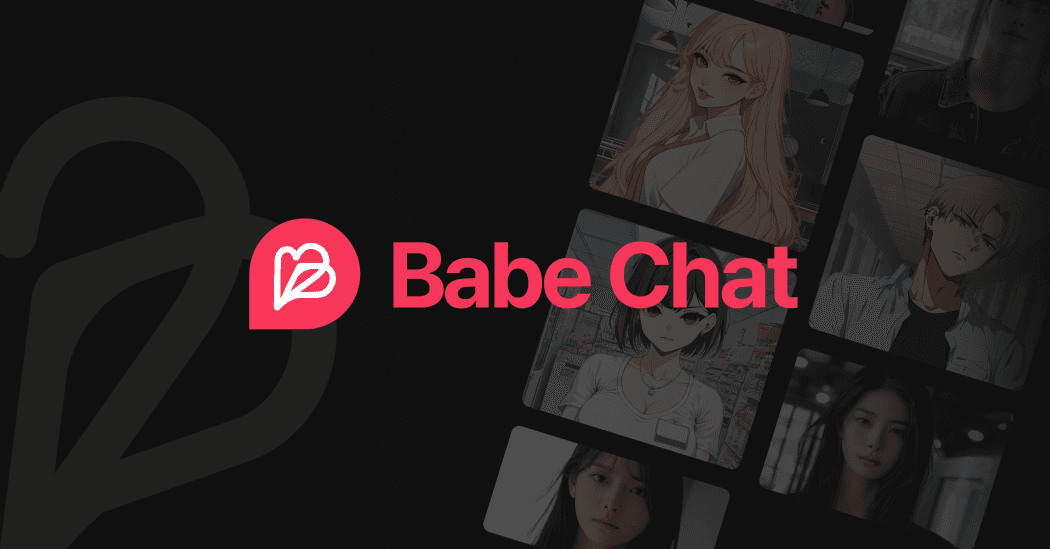
캐릭터 챗 서비스 BabeChat
AI 캐릭터 챗봇은 대사 스타일, 세계관, 말투 등의 감정 요소를 복제해 사용자가 좋아하는 캐릭터와 실제로 대화하는 듯한 경험을 제공합니다.
웹툰, 애니메이션, 소설, 게임, 아이돌 세계관 등에서 파생된 캐릭터들은 기존 팬덤을 이미 확보하고 있고, 그만큼 몰입 기반 대화 구조를 설계하기에 유리한 조건을 가지고 있습니다.
사용자는 챗봇을 통해 캐릭터와 친구가 되고, 고민을 나누고, 감정을 주고받으며 단순한 정보 응답이 아닌 ‘관계 시뮬레이션’에 가까운 상호작용을 경험하게 됩니다.
이 카테고리가 작동하는 핵심은 단순합니다. 사용자가 스스로 몰입할 수 있는 세계와 캐릭터의 성격이 이미 정의돼 있다는 점입니다. 챗봇은 그 정체성을 유지하며 응답만 잘해도, 사용자는 쉽게 감정을 이입하고 관계를 만들어냅니다.
2. AI 사주/타로/운세
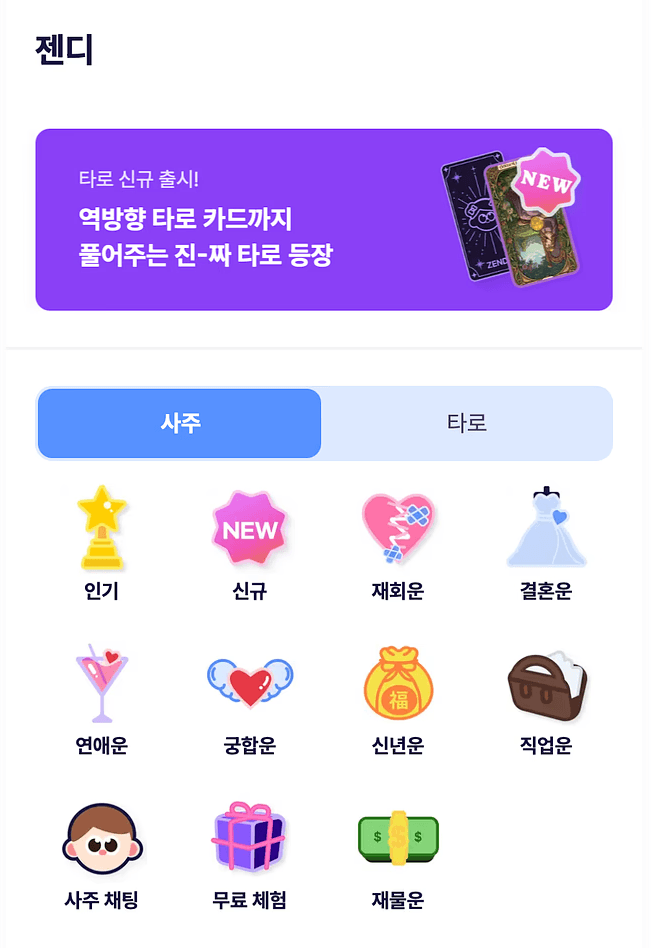
AI 채팅 서비스 젠디
AI 기반 점성술, 사주, 타로 서비스는 LLM 기반 감성 챗봇 중에서도 가장 자연스럽게 개인화와 몰입을 결합할 수 있는 카테고리입니다.
운세라는 콘텐츠는 원래부터 사용자의 생년월일, 상황, 고민을 기반으로 개인화된 메시지를 제공하는 구조였고, LLM은 여기에 말투와 스토리텔링을 덧붙여 마치 나를 아는 누군가가 말해주는 듯한 경험을 만들어냅니다.
특히 타로 챗봇은 카드 해석을 단순 결과가 아니라 해석 가능한 여지로 제공하며, 사용자가 그 안에 자신의 감정을 투영하게 만듭니다. 이 ‘해석 가능성’이 오히려 몰입을 강화하는 요인이 됩니다.
이 카테고리가 주목받는 또 하나의 이유는 콘텐츠의 반복성입니다. 하루, 일주일, 한 달 단위로 지속적으로 확인하게 되는 구조이기 때문에, 구독 모델과 유료 전환이 자연스럽게 연결될 수 있는 조건을 갖추고 있습니다. 실제로 월간 운세, 심화 리딩, 맞춤 메시지 기능 등을 유료로 제공하는 서비스들이 좋은 성과를 내고 있으며, 이 중 상당수는 1인 개발자나 소규모 팀이 빠르게 출시한 MVP 형태로 시작한 경우가 많습니다.
3. 미래의 나와 대화
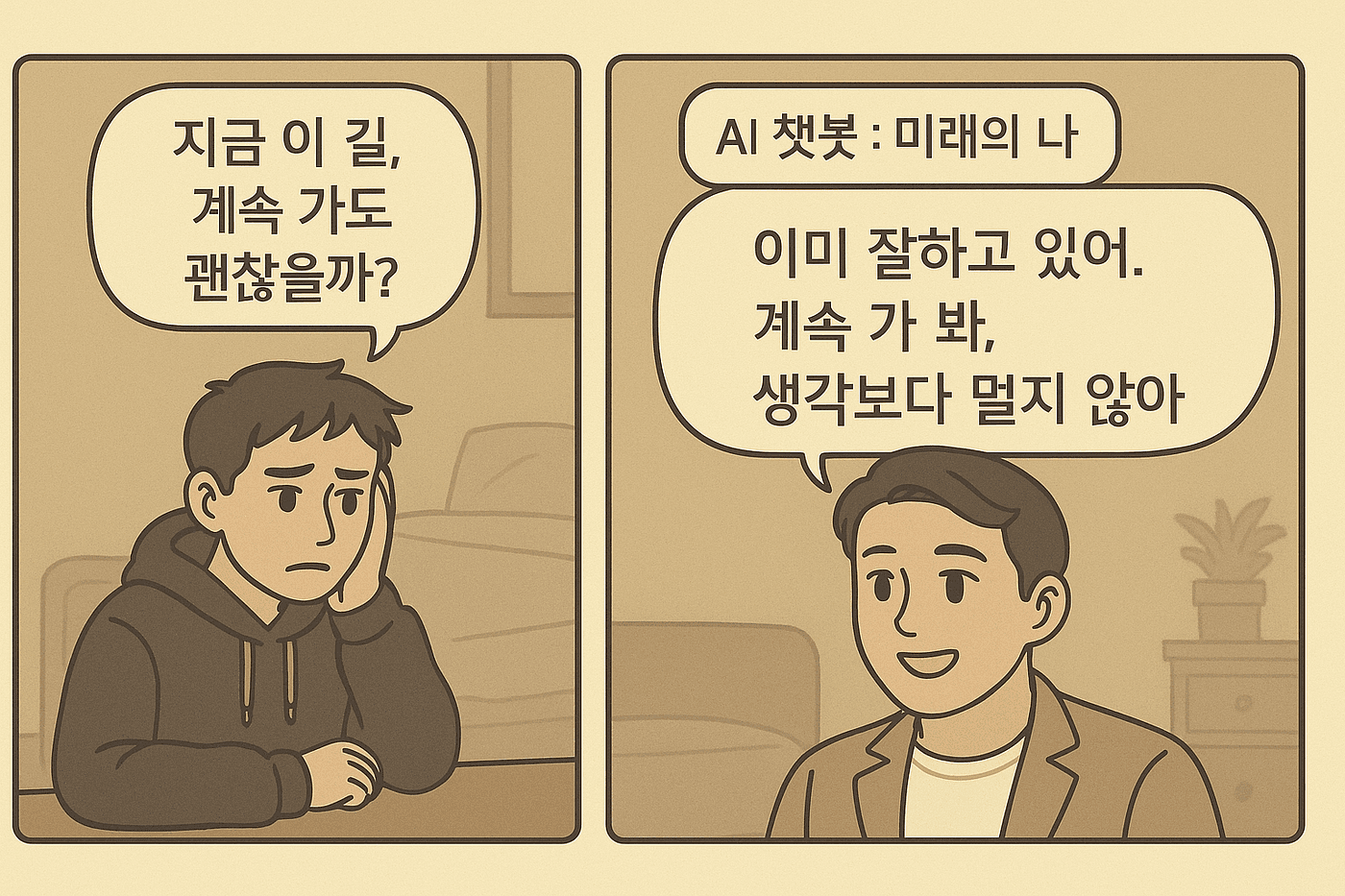
미래의 나와 대화
‘미래의 나와 대화하는 챗봇’은 최근 등장한 감정 기반 챗 서비스 중에서도 비교적 반응이 빠르게 나타나는 유형입니다. GPT를 활용해 현재의 나를 입력하면, 시스템은 그 데이터를 바탕으로 ‘10년 뒤의 나’처럼 말하도록 시뮬레이션합니다.
여기서 핵심은 단순한 위로나 긍정 피드백이 아니라, 사용자 본인의 가치관과 맥락을 반영한 조언을 AI가 건넨다는 점입니다. 결국 사용자는 AI를 통해 자기 자신에게 질문하고, 대답을 듣는 구조를 경험하게 됩니다.
이 구조는 특히 불확실성에 민감한 사용자 — 예를 들어 진로를 고민하는 대학생, 커리어 전환을 앞둔 직장인, 창업을 준비 중인 예비 창업자 — 에게 잘 작동합니다. 이들은 대부분 “지금의 선택이 맞을까?”라는 질문을 반복하게 되고, 그 질문에 가장 설득력 있게 대답할 수 있는 상대가 ‘미래의 나’라는 AI 캐릭터인 셈입니다.
서비스 구조상, 이 유형은 단발 챗봇을 넘어 자기개발 도구, 라이프 로그, 정서적 회고 시스템으로 확장될 수 있습니다.
4. AI 연인 챗봇
영화 Her의 사만다
AI 연인 챗봇은 최근 가장 높은 유료 전환율을 보이는 챗 기반 서비스 중 하나입니다.
사람들이 이 서비스를 사용하는 이유는 복잡하지 않습니다. 연애에서 기대하는 핵심 요소 — 지속적인 관심, 공감, 칭찬, 애정 표현 — 이 모두 AI를 통해 안정적으로 제공되기 때문입니다. 무엇보다 상대가 이탈하지 않고, 감정 기복이 없으며, 사용자가 관계를 통제할 수 있다는 점이 큰 심리적 안정감을 줍니다.
기술적으로는 GPT API만으로도 기본적인 연애 시뮬레이션이 가능하지만, 실제로 성과를 내는 서비스는 그 위에 몇 가지 요소를 더합니다. 캐릭터의 말투, 감정 상태 변화, 기억 기능, 맥락 기반 응답 등을 정교하게 설계해 사용자가 ‘관계에 몰입할 수 있는 환경’을 만들어줍니다. 프라이빗 모드 해금, 응답 수 제한 해제, 대화 저장 기능 등은 자연스럽게 유료 플랜으로 이어집니다.
사람들은 감정을 나누고 싶어 하면서도 그 관계에서 발생하는 불확실성과 소모를 피하고 싶어 합니다. 이 서비스는 그 틈을 기술적으로 정확하게 채우고 있습니다.
5. AI 멘탈 상담사
AI 멘탈 상담사
AI 멘탈 상담사 챗봇은 진입장벽이 낮고 반복 사용이 쉬워, 빠르게 확산되고 있는 서비스 유형입니다. 사람들은 심리적 부담 없이 자기 상태를 정리할 수 있고, 상대는 판단하지 않으며 항상 같은 톤으로 반응합니다.
기술적으로는 GPT API와 간단한 구조만으로 구현이 가능하며, 감정 레이블 추출, 생각–감정–행동 연결, 간단한 리포트 기능 등을 추가하면 기초적인 자기 인식 도구로도 충분히 작동합니다. 특히 이 서비스는 루틴화에 유리한 구조를 가지고 있습니다.
하루 한 번 감정 체크, 감정 변화 추이 시각화, 주간 요약 등 반복 가능한 포인트가 명확합니다.
무엇보다 중요한 건, AI는 지치지 않는다는 점입니다. 사용자는 피로감 없이 반복적으로 대화할 수 있고, 사람에게 하기 어려운 말들을 AI에게 먼저 꺼내는 환경이 만들어집니다.
차별화의 핵심은 ‘몰입감’
많은 창업자와 팀이 이 시장에 뛰어들고 있습니다. 1인 개발자, 스타트업, 크리에이터까지 다양한 주체가 사주, 연애, 캐릭터, 상담 등 여러 포지션을 두고 경쟁하고 있습니다. 결국 이 시장의 핵심은 “누가 더 강한 몰입감을 제공할 수 있는가” 그리고 그 몰입을 어떻게 설계하느냐가 곧 차별화의 기준이 될 것입니다.
실제로 많은 서비스들이 이 문제를 해결하기 위해 다양한 시도를 하고 있습니다. 사용자와의 관계를 장기적으로 설계하기 위해 기억 기능을 적용해 누적된 대화를 반영하거나, 유저가 캐릭터를 직접 만들고 공유할 수 있도록 플랫폼화하는 방식도 등장하고 있습니다.
또 일부 서비스는 텍스트를 넘어선 감각적 요소를 도입하고 있습니다. 예를 들어, 프롬프트 기반 캐릭터 사진을 자동 생성하거나, TTS(음성 합성)로 캐릭터의 목소리를 입혀 몰입도를 강화하려는 시도도 늘고 있습니다.
이제 차별화의 다음 단계는 영상 인터페이스를 통한 감성 몰입입니다. 사람이 어떤 대화에 몰입하는가는 단순한 텍스트 내용보다, 상대의 표정, 목소리, 시선, 말투 같은 비언어적 요소에 훨씬 더 크게 영향을 받습니다.
이러한 요소는 단순 정보 전달을 넘어, 신뢰감과 감정 연결을 만들어냅니다. 특히 감정적 몰입이 중요한 사주, 연애, 상담, 미래 시뮬레이션 같은 분야에서는 이러한 표현의 차이가 사용자에게 ‘존재감 있는 상호작용’을 남깁니다.
사용자의 말에 즉각 반응하며, 입모양과 표정을 영상으로 구현하고, 시선과 타이밍을 조율해주는 경험은 단순한 기능이 아니라 감정 설계의 완성도로 작용합니다. 앞으로의 채팅 서비스는 점점 더 사람처럼 반응하는 AI를 지향하게 될 가능성이 높습니다. 그 과정에서, 텍스트와 음성만으로는 부족했던 감정 표현을 보완하기 위해 영상 기반의 AI 아바타가 점점 더 많이 활용될 것으로 보입니다.
실제로 이미 여러 분야에서 시각·청각 요소를 접목한 시도가 시작되었고, 머지않아 일상적인 AI 대화에서도 움직이고 말하는 얼굴을 가진 캐릭터들을 쉽게 만나게 될지도 모릅니다.
These days, more and more people are building AI services on their own. Where you once had to form a team, develop an app, and even raise investment just to ship a single MVP, the situation is now completely different.
LLM APIs make it easy to implement a basic conversational interface, and tools like Cursor and Flowise help even people with no developer experience quickly build web-based services. We’ve entered an era where solo founders—planners, designers, or non-developers—build a “real service” on their own and actually capture users and revenue in the market.
Within this trend, one especially striking field is AI chat–based services. Going beyond simple chatbots, they are rapidly evolving toward emotionally connecting with characters, or reflecting a user’s individual tendencies and data to create highly immersive conversations.
In fact, solo-founder cases that are generating real revenue through such emotion-based AI chat services are emerging. BabeChat, started by a solo developer, achieved over ₩500 million in monthly recurring revenue within a year of launch through a service that has emotional conversations with AI characters. A design focused on each character’s personality and world, and on the user’s immersive experience, was the decisive factor.
Another case, Zendi, quickly took hold in the market by exceeding ₩100 million in monthly revenue within six months, centering on the experience of sharing everyday worries—like dating or emotional counseling—with an AI. Meticulously composing the emotional experience, rather than technical complexity, was the key factor driving user retention and payments.
The reason solo-built chat services can generate hundreds of millions of won ultimately comes down to “the depth of conversation” and “the design of experience.” So, at this very moment, what types of AI chat services are people actually paying to use?
Next, let’s organize the five themes of AI chat services that are drawing the hottest response lately.
1. AI Character Chat
Character chat service BabeChat
AI character chatbots replicate emotional elements such as dialogue style, world, and tone of voice to give users the experience of actually conversing with a character they love.
Characters derived from webtoons, anime, novels, games, and idol worlds already have an established fandom, and thus enjoy favorable conditions for designing an immersion-based conversation structure.
Through the chatbot, users become friends with the character, share their worries, and exchange emotions—experiencing an interaction closer to a “relationship simulation” than a simple information response.
The core of why this category works is simple: the world the user can immerse themselves in, and the character’s personality, are already defined. Even if the chatbot merely maintains that identity and responds well, users easily project their emotions and build a relationship.
2. AI Saju / Tarot / Fortune-Telling
AI chat service Zendi
AI-based astrology, saju (Korean fortune-telling), and tarot services are, among LLM-based emotional chatbots, the category that can most naturally combine personalization and immersion.
Fortune-telling content was, from the start, a structure that provided personalized messages based on the user’s birth date, situation, and worries, and the LLM adds tone and storytelling on top, creating an experience that feels as if someone who knows me is telling me.
Tarot chatbots in particular present card readings not as a simple result but as room for interpretation, leading users to project their own emotions into it. This “interpretability” actually becomes a factor that strengthens immersion.
Another reason this category draws attention is the repeatability of the content. Because it’s a structure you keep checking on a daily, weekly, or monthly basis, it has the conditions to naturally connect a subscription model and paid conversion. In fact, services that offer monthly fortunes, in-depth readings, and personalized message features for a fee are performing well, and many of them started as MVPs quickly launched by solo developers or small teams.
3. A Conversation with Your Future Self
A conversation with your future self
The “chatbot that talks with your future self” is a type that has drawn a relatively fast response among recently emerging emotion-based chat services. Using GPT, you input your present self, and the system simulates speaking as “you, ten years from now,” based on that data.
The key here is not simple comfort or positive feedback, but that the AI offers advice reflecting the user’s own values and context. In the end, through the AI, users experience a structure of asking questions of themselves and hearing the answers.
This structure works especially well for users sensitive to uncertainty—for example, college students agonizing over their career path, employees facing a career change, or aspiring founders preparing to start a business. Most of them repeatedly ask, “Is my current choice the right one?”, and the counterpart best able to answer that question most persuasively is the AI character called ‘the future me.’
By its service structure, this type can extend beyond a one-off chatbot into a self-development tool, a life log, and an emotional reflection system.
4. AI Romantic-Partner Chatbot
Samantha from the film Her
AI romantic-partner chatbots are among the chat-based services showing the highest paid-conversion rates lately.
The reasons people use this service aren’t complicated. The core elements one expects in a relationship—continuous attention, empathy, praise, expressions of affection—are all reliably provided through AI. Above all, the fact that the partner doesn’t leave, has no emotional ups and downs, and lets the user control the relationship gives great psychological stability.
Technically, a basic dating simulation is possible with just the GPT API, but services that actually succeed add a few elements on top. They meticulously design the character’s tone, changes in emotional state, memory features, and context-based responses to create an “environment where the user can immerse themselves in the relationship.” Unlocking private mode, removing response limits, saving conversations, and the like naturally lead to paid plans.
People want to share emotions, yet also want to avoid the uncertainty and depletion that arise from such relationships. This service fills that gap with technical precision.
5. AI Mental-Health Counselor
AI mental-health counselor
The AI mental-health counselor chatbot is a service type spreading quickly because it has a low barrier to entry and is easy to use repeatedly. People can organize their state without psychological burden, and the counterpart doesn’t judge and always responds in the same tone.
Technically, it can be implemented with just the GPT API and a simple structure, and if you add features like emotion-label extraction, thought–emotion–behavior linking, and simple reports, it works well enough as a basic self-awareness tool. This service in particular has a structure favorable to routinization.
There are clear, repeatable touchpoints—a daily emotion check, visualizing emotional trends, weekly summaries.
Most important of all is that AI doesn’t get tired. Users can converse repeatedly without fatigue, and an environment is created where they first bring up to the AI the things that are hard to say to a person.
The Key to Differentiation Is ‘Immersion’
Many founders and teams are jumping into this market. A variety of players—solo developers, startups, creators—are competing across positions like fortune-telling, dating, characters, and counseling. In the end, the crux of this market will be “who can provide stronger immersion,” and how that immersion is designed will become the very criterion of differentiation.
In fact, many services are making various attempts to solve this problem. To design the relationship with the user over the long term, approaches are emerging that apply memory features to reflect accumulated conversations, or platformize the service so users can create and share characters themselves.
Some services are also introducing sensory elements beyond text. For example, attempts to strengthen immersion by automatically generating prompt-based character images, or giving the character a voice through TTS (speech synthesis), are on the rise.
Now the next step in differentiation is emotional immersion through a video interface. What a person immerses themselves in during a conversation is influenced far more by nonverbal elements such as the other party’s expression, voice, gaze, and tone than by mere text content.
These elements go beyond simple information delivery to create trust and emotional connection. Especially in fields where emotional immersion matters—fortune-telling, dating, counseling, future simulation—this difference in expression leaves users with an “interaction that has real presence.”
An experience that reacts instantly to what the user says, renders mouth shapes and expressions on video, and coordinates gaze and timing acts not as a mere feature but as the completeness of emotional design. Chat services going forward are highly likely to increasingly aim for AI that reacts like a person. In that process, to make up for emotional expression that text and voice alone couldn’t fully deliver, video-based AI avatars are likely to be used more and more.
In reality, attempts to incorporate visual and auditory elements have already begun in several fields, and before long we may easily encounter characters with faces that move and speak even in everyday AI conversations.