골프장 예약실은 걸려오는 전화를 받고 업무를 처리하는 것만으로도 바쁩니다. 그러다 보니 정작 중요한 고객 관리와 마케팅에는 충분한 시간을 쓰기 어렵습니다. 하지만 이제 AI가 반복 문의와 예약 업무를 처리하고, 필요한 고객에게 먼저 전화를 걸어 예약을 제안하면서 골프장 운영 방식도 달라지고 있습니다.
그렇다면 골프장 AI 상담원은 구체적으로 어떤 일을 할 수 있을까요?
인바운드: 반복 문의는 빠르게 처리하고, 직원은 중요한 고객에게 집중합니다
골프장으로 걸려오는 전화에는 비슷한 질문이 반복되는 경우가 많습니다.
이번 주 토요일에 예약 가능한 티타임이 있나요?
그린피와 카트비, 캐디피는 얼마인가요?
예약 날짜나 시간을 변경할 수 있나요?
우천취소 규정이 어떻게 되나요?
AI 상담원은 골프장의 운영 정책을 바탕으로 이러한 반복 문의에 24시간 응대할 수 있습니다. 여러 고객의 전화가 동시에 들어오는 시간에도 각각의 문의를 받을 수 있어 통화 대기와 부재중 전화를 줄이는 데 도움이 됩니다.
안내를 넘어 예약 업무까지 연결
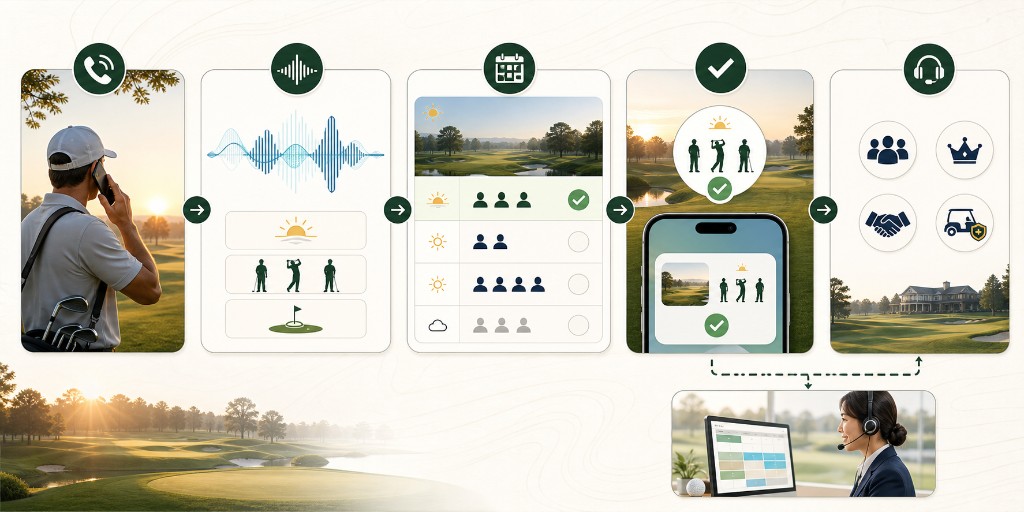
기존 ARS가 고객에게 메뉴를 선택하게 하거나 홈페이지 주소를 안내하는 데 그쳤다면, AI 상담원은 고객이 평소처럼 말한 내용을 이해하고 다음 업무로 이어갈 수 있습니다.
예를 들어 고객이 “이번 주 토요일 1부 타임에 3인 플레이로 예약할 수 있나요?”라고 물으면 AI 상담원은 단순히 남은 시간을 찾는 데서 그치지 않고, 3인 플레이 가능 조건까지 함께 확인해야 합니다.
고객이 원하는 날짜, 1부·2부 구분과 플레이 인원을 확인합니다.
예약 시스템에서 1부 잔여 티타임과 3인 플레이 가능 여부를 조회합니다.
가능한 티타임, 적용 요금과 추가 조건을 안내합니다.
조건에 맞는 자리가 없다면 2부 타임이나 다른 가능한 시간대, 대기 등록 같은 대안을 제안합니다.
선택한 티타임을 예약하고 이용 조건을 문자나 알림 메시지로 발송합니다.
서서울CC에 적용된 AI 상담원의 실제 예약 응대 통화
예약 시스템 연동 범위에 따라 단순 문의 응대뿐 아니라 예약 확인, 변경, 취소까지 자동화할 수 있습니다. 시스템에서 바로 처리하기 어려운 경우에는 고객의 요청을 정리해 직원에게 전달하는 방식도 가능합니다.
모든 전화를 AI가 끝낼 필요는 없습니다
단체 예약, VIP 회원 응대, 제휴사 요금, 사고 관련 문의처럼 직원의 판단과 세심한 대응이 필요한 상담도 있습니다. 이런 문의까지 AI가 무리하게 처리하게 하면 오히려 고객 경험이 나빠질 수 있습니다.
따라서 골프장 AI 상담은 업무를 다음과 같이 나누어 설계하는 것이 중요합니다.
이용요금, 위치, 운영시간 등 정형화된 문의는 AI가 안내
예약 조회, 변경, 취소 등 시스템 처리가 필요한 업무는 확인 절차 후 AI가 처리
단체 예약, VIP 회원 응대와 예외 요청은 필요한 정보를 먼저 수집한 뒤 담당 직원에게 전달
민원, 사고, 분쟁 가능성이 있는 상담은 빠르게 직원에게 연결
AI가 어디까지 처리하고 언제 사람에게 넘길지를 명확하게 정하면, 직원은 반복적인 문의에서 벗어나 중요한 고객과 현장 서비스에 집중할 수 있습니다.
아웃바운드: 골프장이 먼저 전화하는 새로운 예약 방식
지금까지 골프장에서 전화는 주로 ‘고객의 문의를 받는 채널’이었습니다. 고객 한 명씩 전화를 거는 데 많은 시간이 필요하기 때문에, 예약실 직원이 평일·비수기 티타임을 제안하거나 재방문을 유도하는 아웃바운드 마케팅까지 수행하기는 현실적으로 쉽지 않았습니다.
아웃바운드 AI 상담은 이러한 제약을 바꿀 수 있는 새로운 선택지입니다. 정해진 조건에 맞는 고객에게 AI가 먼저 전화를 걸고, 질문에 답하며 예약 의사를 확인합니다. 과거에는 비용과 인력 문제로 실행하기 어려웠던 ‘골프장이 먼저 제안하는 예약 상담’을 운영할 수 있게 되는 것입니다.
취소 티타임을 새로운 예약으로 전환
취소가 발생했다고 해서 해당 티타임을 항상 다시 채울 수 있는 것은 아닙니다. 특히 이용일까지 시간이 얼마 남지 않았다면 고객 일정과 조건이 맞아야 하므로 재판매가 쉽지 않습니다. 다만 지금까지는 별도로 시도하기 어려웠던 취소 티타임에 대해, AI가 조건에 맞는 고객에게 빠르게 연락하는 보완 채널을 만들 수 있습니다.
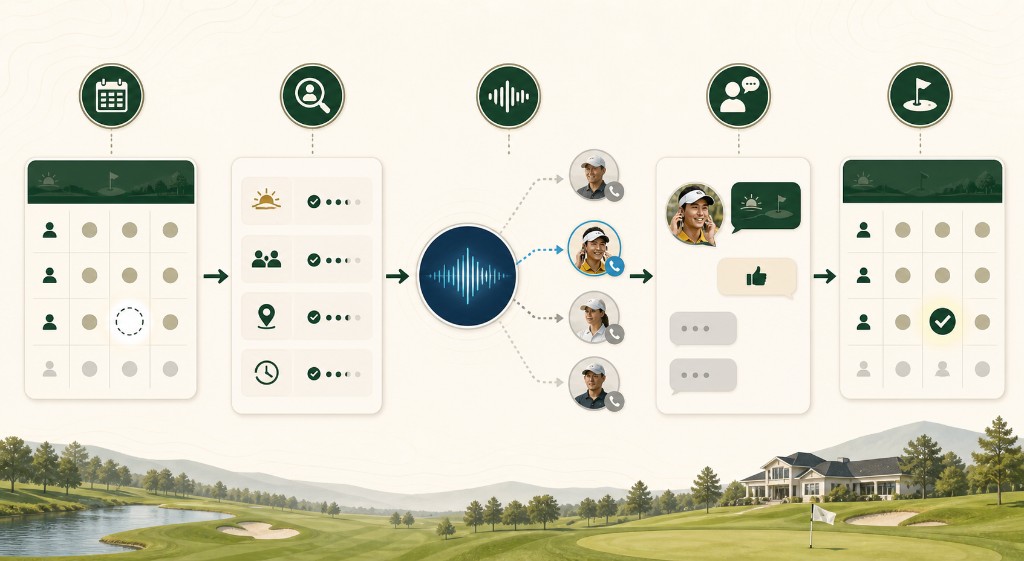
AI를 활용하면 다음과 같은 흐름을 만들 수 있습니다.
예약 취소로 빈 티타임이 발생합니다.
희망 요일, 시간대, 이용 이력 등의 조건에 맞는 고객을 선별합니다.
AI가 연락 가능한 고객에게 순차적으로 전화를 겁니다.
티타임과 요금, 혜택을 안내하고 예약 의사를 확인합니다.
예약 시스템에 접수하거나 직원의 최종 확인 단계로 전달한 뒤 확정 안내를 발송합니다.
취소 자리를 단순히 공지하는 데서 끝내지 않고 고객과 실제로 대화하며 새로운 예약 가능성을 만들 수 있습니다. 특히 특정 시간대를 선호했던 고객에게 먼저 안내하면 무작위 홍보 전화보다 관련성 높은 제안이 가능합니다.
프로모션과 재방문 캠페인도 자동화
아웃바운드 AI 상담은 취소 티타임 외에도 다양한 예약 활성화 업무에 활용할 수 있습니다.
평일·비수기 잔여 티타임 프로모션 안내
특정 시간대 또는 패키지 상품 안내
이전 방문 고객을 대상으로 한 재예약 제안
장기간 방문하지 않은 고객의 재방문 캠페인
단체·법인 고객의 다음 일정 확인
예약 고객 대상 노쇼 방지 사전 안내
예를 들어 AI 상담원이 “지난번과 비슷한 금요일 오전 시간대에 예약 가능한 티타임이 나와 안내드리려 연락드렸습니다”라고 말을 건넨 뒤, 고객이 관심을 보이면 가능한 시간을 설명하고 예약 의사를 받을 수 있습니다. 고객이 원하지 않으면 즉시 연락 대상에서 제외하도록 설정할 수도 있습니다.
중요한 것은 많은 전화를 무작위로 거는 것이 아닙니다. 고객의 수신 동의와 골프장의 운영 정책을 바탕으로 적절한 대상, 시간대, 횟수를 정하고 고객에게 의미 있는 제안을 하는 것이 핵심입니다.
인바운드와 아웃바운드가 연결될 때 데이터의 가치가 커집니다
인바운드와 아웃바운드를 별개의 업무로 운영하면 고객의 관심 정보가 충분히 활용되지 못할 수 있습니다. 반대로 두 흐름을 연결하면 고객이 먼저 남긴 수요를 이후 예약 기회와 연결할 수 있습니다.
예를 들어 고객이 원하는 토요일 1부의 가능 티타임이 없어 예약하지 못했다면, AI가 희망 조건과 연락 가능 여부를 확인해 둘 수 있습니다. 이후 조건에 맞는 자리가 생기면 아웃바운드 AI 상담원이 고객에게 먼저 연락합니다.
고객의 티타임 문의 → 희망 조건 확인 → 대기 수요 등록 → 취소 자리 발생 → AI가 고객에게 연락 → 예약 접수
걸려오는 전화에서 얻은 고객의 수요가, 고객에게 거는 전화의 정교한 기준이 되는 것입니다. 이를 통해 골프장은 단순히 전화 응대 비용을 줄이는 수준을 넘어 놓쳤던 예약 기회를 다시 확보할 수 있습니다.
골프장 AI 상담 도입 전 확인해야 할 사항
AI 상담의 성과는 실제 운영 과정과 얼마나 잘 연결되는지가 중요합니다.
1. 어떤 업무부터 자동화할 것인가
문의량이 많고 답변 기준이 명확한 업무부터 시작하는 것이 좋습니다. 이용요금, 운영시간, 위치, 예약 확인처럼 반복성이 높은 문의를 먼저 자동화하고, 이후 예약 변경과 아웃바운드 캠페인으로 범위를 넓힐 수 있습니다.
2. 예약 시스템과 어디까지 연동할 것인가
AI가 티타임을 조회만 할 것인지, 예약 확정까지 처리할 것인지 결정해야 합니다. 변경과 취소 권한, 본인 확인 방식, 초과 예약 기준도 함께 설계해야 합니다.
3. 언제 직원에게 연결할 것인가
AI 상담원이 이해하지 못한 문의뿐 아니라 앞서 살펴본 예외 상황까지 포함해 인계 시점을 미리 정의해야 합니다. 이때 문의 유형, 확인된 고객 정보, 고객의 요청과 이미 안내한 내용을 함께 넘기면 직원이 같은 질문을 다시 하지 않고 상담을 이어갈 수 있습니다.
4. 아웃바운드 연락 기준을 어떻게 관리할 것인가
수신 동의 여부, 연락 가능 시간, 캠페인별 대상 조건, 최대 연락 횟수와 수신 거부 반영 방식을 정해야 합니다. 고객 이력에 맞는 제안을 하되 과도한 연락으로 브랜드 경험을 해치지 않도록 관리하는 것이 중요합니다.
골프장 AI 상담의 목표는 전화 자동화가 아니라 예약 운영의 개선입니다
골프장 AI 상담은 걸려오는 전화를 대신 받는 데서 끝나지 않습니다. 인바운드에서는 반복 문의와 예약 업무를 효율화하고, 아웃바운드에서는 취소·잔여 티타임을 새로운 예약 기회로 연결합니다. 직원은 AI가 처리하기 어려운 예외 상황과 중요한 고객 응대에 집중할 수 있습니다.
다만 골프장마다 예약 시스템과 운영 정책, 고객 구성, 자주 발생하는 문의가 다릅니다. 같은 AI 상담을 그대로 적용하기보다 실제 전화 데이터를 바탕으로 자동화 범위와 직원 연결 기준을 설계해야 합니다.
우리 골프장에서는 어떤 문의를 AI가 처리할 수 있는지, 취소 티타임 안내와 프로모션 전화까지 어떻게 연결할 수 있는지 궁금하신가요?
현재 사용 중인 예약 시스템과 전화 운영 방식에 맞춰 인바운드·아웃바운드 AI 상담의 적용 범위를 함께 진단해 드립니다. 골프장 AI 상담 도입을 검토하고 계시다면 브이몬스터에 문의해 주세요.
A golf course reservation desk is busy enough just answering the phone and processing what comes in. That leaves little time for the work that actually matters—customer relationships and marketing. But operations are starting to change: AI now handles repetitive inquiries and booking tasks, and it can even place the first call to the right customer with an offer.
So what exactly can a golf course AI agent do?
Inbound: Handle repetitive inquiries fast, so staff can focus on the customers who matter
Calls coming into a golf course tend to repeat the same handful of questions.
Do you have any tee times available this Saturday?
How much are the green fee, cart fee, and caddie fee?
Can I change the date or time of my booking?
What is your rain-cancellation policy?
Built on the course’s own operating policies, an AI agent can answer these recurring questions around the clock. It can also take several calls at once during busy periods, which helps cut hold times and missed calls.
From answering questions to completing booking tasks
Where a conventional IVR only walks callers through a menu or points them to a website, an AI agent understands what the customer says in ordinary language and carries the request through to the next step.
Say a customer asks, “Can I book a first-round tee time this Saturday for a threesome?” The agent shouldn’t stop at finding open slots—it also has to check whether three-player rounds are allowed under those conditions.
Confirm the requested date, whether it’s a first or second round, and the number of players.
Query the reservation system for remaining first-round tee times and three-player eligibility.
Present the available tee times, the applicable rate, and any additional conditions.
If nothing matches, offer alternatives—second-round times, other open windows, or joining a waitlist.
Book the chosen tee time and send the terms of play by SMS or push notification.
A real booking call handled by the AI agent deployed at Seoseoul CC
Depending on how deeply the reservation system is integrated, this extends beyond answering questions to automating booking lookups, changes, and cancellations. When something can’t be processed directly in the system, the agent can summarize the request and pass it to staff instead.
Not every call needs to end with AI
Some conversations call for a person’s judgment and care—group bookings, VIP members, partner rates, incident-related inquiries. Forcing AI to push through those can make the customer experience worse, not better.
That’s why golf course AI support should be designed with a clear division of work.
Standardized questions—rates, location, operating hours—are answered by AI
Tasks requiring system access—booking lookups, changes, cancellations—are handled by AI after verification
Group bookings, VIP members, and exception requests are collected first, then routed to the responsible staff member
Complaints, incidents, and anything that could escalate into a dispute go straight to a person
Once you define exactly how far AI goes and when it hands off, staff are freed from repetitive inquiries and can concentrate on key customers and on-site service.
Outbound: A new way to fill bookings, with the course calling first
Until now, the phone has mostly been a channel for receiving inquiries at a golf course. Because calling customers one at a time takes so much time, it was rarely realistic for reservation staff to also run outbound marketing—pitching weekday or off-season tee times, or nudging past guests to return.
Outbound AI support is a new option that changes that constraint. AI places the first call to customers who match a defined set of criteria, answers their questions, and confirms whether they want to book. In other words, the “course reaches out first” booking conversation—once impractical on cost and headcount—becomes something you can actually operate.
Turning cancelled tee times into new bookings
A cancellation doesn’t mean the tee time can always be refilled. Resale is especially hard when the play date is close, since the customer’s schedule and conditions have to line up. Still, for cancelled tee times that were previously too costly to chase, AI can create a supplementary channel that reaches matching customers quickly.
With AI, the flow can look like this.
A cancellation opens up an empty tee time.
Customers are shortlisted by criteria such as preferred day, time window, and play history.
AI calls the reachable customers in sequence.
It explains the tee time, rate, and benefits, then confirms booking intent.
The booking is entered into the system—or passed to staff for final confirmation—and a confirmation notice is sent.
Instead of simply posting the open slot somewhere, you can actually talk with customers and create a real chance of a booking. Reaching out first to customers who already favored that time window makes the offer far more relevant than a cold promotional call.
Promotions and win-back campaigns, automated too
Beyond cancelled tee times, outbound AI support can drive a range of booking-activation work.
Promotions for remaining weekday and off-season tee times
Offers for specific time windows or package products
Rebooking proposals to previous guests
Win-back campaigns for customers who haven’t visited in a long time
Checking on the next date for group and corporate clients
Advance no-show prevention reminders for booked customers
For example, the agent might open with, “A tee time opened up on Friday morning, similar to your last visit, so I wanted to let you know.” If the customer is interested, it walks through the available times and takes their booking intent. If they aren’t, it can be configured to remove them from the contact list immediately.
The point is not to place as many calls as possible. What matters is setting the right audience, time windows, and frequency based on customer consent and the course’s own policies—and making offers that are genuinely relevant.
Connect inbound and outbound, and your data becomes far more valuable
Run inbound and outbound as separate operations, and what you learn about customer interest goes underused. Connect the two flows, and the demand a customer volunteers on one call becomes a booking opportunity on the next.
Suppose a customer couldn’t book because no first-round tee time was open on their preferred Saturday. AI can capture their desired conditions and whether they’re open to being contacted. When a matching slot later appears, the outbound AI agent reaches out first.
Tee time inquiry → capture preferred conditions → register as waiting demand → cancellation opens a slot → AI calls the customer → booking entered
The demand surfaced on incoming calls becomes the targeting logic for outgoing ones. That takes the course beyond simply lowering call-handling costs, into recovering bookings it used to miss.
What to settle before adopting golf course AI support
The results of AI support depend on how well it connects to the way you actually operate.
1. Which tasks do you automate first?
Start with high-volume work that has clear answers. Automate the most repetitive inquiries first—rates, operating hours, location, booking confirmations—then widen the scope to booking changes and outbound campaigns.
2. How far do you integrate with the reservation system?
Decide whether AI only looks up tee times or also confirms bookings. Permissions for changes and cancellations, the identity verification method, and overbooking rules all need to be designed alongside it.
3. When does the call go to a person?
Define the handoff points in advance—not just inquiries the agent doesn’t understand, but the exception cases described above. Passing along the inquiry type, the customer details already verified, the request, and what has already been explained lets staff continue the conversation without asking the same questions again.
4. How do you govern outbound contact rules?
Set consent status, permitted contact hours, per-campaign audience criteria, maximum contact attempts, and how opt-outs are applied. Make offers that fit each customer’s history—while making sure excessive contact doesn’t damage the brand experience.
The goal isn’t automating phone calls—it’s improving how bookings are run
Golf course AI support doesn’t end with answering incoming calls. On the inbound side it streamlines repetitive inquiries and booking work; on the outbound side it converts cancelled and remaining tee times into new booking opportunities. Staff, in turn, can focus on the exceptions AI shouldn’t handle and on the customers who matter most.
That said, every course differs in reservation system, operating policy, customer mix, and the questions that come up most. Rather than dropping in the same AI setup, the automation scope and handoff rules should be designed from your actual call data.
Wondering which inquiries AI could handle at your course—and how to extend that to cancelled tee time alerts and promotional calls?
We’ll assess the right scope for inbound and outbound AI support together, based on the reservation system and phone operations you use today. If you’re considering golf course AI support, get in touch with VMONSTER.